


Salams: Halal Muslim Marriage
4.01.15K Reviews
App Specs
- Version
- 12.13.1
- Updated On
- License
- Free
- Downloads
- 1,000,000+
- Developer
- Affinity Apps, LLC
- Categories
- Social
- Platform
- Android
Screenshots

 Analysis by AppCompare
I approached Salams: Halal Muslim Marriage as a social app with a more specific purpose than ordinary dating platforms. It is designed around Muslim marriage, friendships, and halal dating, so the main question is not simply whether it helps people meet. The more useful question is whether its structure gives users enough control to decide how, when, and why they want to connect.
My overall impression is positive but measured. The app can make it easier to meet Muslims who are looking for culturally and religiously compatible relationships, yet that focus does not remove the need for careful judgment. Profiles, conversations, and intentions still vary from person to person. I would recommend it to someone who wants a focused Muslim social environment, provided they are willing to move slowly, protect personal information, and use their own standards rather than treating an app connection as proof of trust.
How Salams fits into Muslim dating and social discovery
Salams is a free social app from Affinity Apps, LLC. It has been available since May 24, 2016, and its current version is 12.13.1. On Android, it requires at least OS 9, while its mature 17+ age rating reflects the relationship-focused nature of the service rather than making it suitable for every teenager.
The app’s identity is narrower than that of a general-purpose social network. Instead of placing you in a huge mixed audience, it centers Muslim marriage, Muslim friendships, and halal dating. That focus is its clearest advantage. If I wanted to meet people who already understand the importance of faith, family expectations, and religious boundaries, I would find this more relevant than starting with a broad dating app and explaining those basics repeatedly.
At the same time, a focused audience does not guarantee identical beliefs or intentions. One person may be ready to discuss marriage, another may be exploring friendship, and someone else may simply be curious. I would therefore treat the app’s religious focus as a useful starting point, not as a substitute for asking direct questions. Compatibility still depends on practice, values, communication style, family expectations, location, and timing.
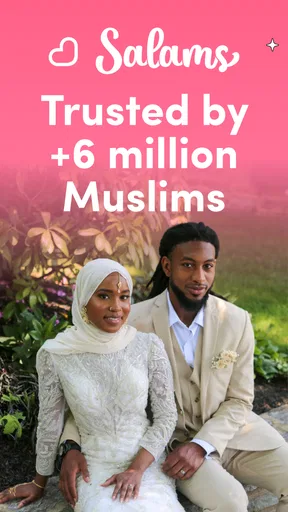
The scale is substantial: Salams has passed one million installs, with an average rating of 4.0 from around twenty-nine thousand ratings and roughly one thousand one hundred written reviews. Those figures suggest that the app has reached a meaningful audience, but they should not be read as a guarantee that every local area will feel equally active. A user’s experience can depend heavily on who is nearby and who is currently looking for the same kind of connection.
What I would use it for
I see three practical uses. The first is intentional marriage-oriented dating. Someone who wants to make their purpose clear from the beginning may appreciate a setting where that goal is expected rather than awkward to explain. The second is friendship with other Muslims, especially for people who have moved, work remotely, or live somewhere with a small Muslim community. The third is a gradual way to meet people before deciding whether a connection deserves a more serious conversation.
Worth Reading Before You Choose

Flipboard Shows What News Apps Must Do Beyond the Feed

Switching to Android Auto Means Rethinking Your Driving Routine

Google Calendar Makes a Crowded Week Easier to Manage

Ludo King Makes the Most of the Minutes Between Plans

Baby Panda World Brings Quick Play to Modern Phones, but Its Game Library Feels Busy

ESPN’s Live Game View Makes Following Close Games Easier
A realistic everyday example would be a Muslim professional who has little time for community events. After work, they could review profiles, identify people whose goals appear compatible, and start a respectful conversation without immediately sharing a phone number. The sensible workflow is to keep the first exchanges inside the app, ask about intentions early, and pay attention to whether the other person respects boundaries. If the conversation becomes serious, the user can decide when to involve trusted people or move to another communication method.
That workflow matters because the app is not only about finding a match. It is also about managing the pace of access. A good connection should not require instant personal disclosure, emotional intensity, or pressure to leave the platform. In my view, the strongest benefit is the opportunity to filter for shared context before investing too much time.
Trust begins with what the app can and cannot prove
I would not use the Muslim focus as evidence that every profile is genuine, serious, or safe. The app can bring people together around a shared identity and purpose, but users still need to verify important details through conversation and, where appropriate, trusted community or family channels. A polished profile is only an introduction.
This is especially important when someone quickly asks for money, private documents, intimate images, or urgent help. Those requests should be treated as warning signs regardless of how compatible the profile appears. I would also be cautious with anyone who avoids reasonable questions, changes their story, pushes secrecy, or tries to make me feel guilty for setting a limit.
Trust is also affected by how transparent a person is about their intentions. I would ask whether they are seeking marriage, friendship, or casual conversation, and I would listen for consistency rather than accepting a reassuring answer once. The app’s category can make a conversation feel more serious, but only sustained behavior shows whether that seriousness is real.
Controls and choices I would prioritize
When using a relationship app, I pay close attention to the choices available around interaction and account management. I want to know what I can control before I become invested in a conversation. In practical terms, that means reviewing the account settings, notification choices, profile visibility options, and any tools for managing unwanted contact as soon as I begin using the app.
I would also avoid treating every prompt as mandatory. If the app asks for information that feels too personal for an early stage, I would consider whether it is genuinely needed to use the service. A profile can communicate values and intentions without revealing an exact workplace, home address, daily routine, or other details that make someone easier to identify offline.
The same principle applies to photos. I would choose images that feel authentic but do not reveal sensitive locations, identification documents, children’s faces without permission, or predictable routines. A photo taken outside a recognizable home or workplace can disclose more than intended. This is a small decision, but it is one of the easiest ways to reduce unnecessary exposure.
Because the app includes in-app purchases ranging from $0.99 to $249.99 per item, I would review purchase settings before experimenting with paid options. The free starting point makes it accessible, but optional spending can become less obvious when a user is emotionally invested in meeting someone. I would set a personal limit in advance and judge any paid feature by a clear goal rather than by frustration or urgency.
Data-sensitive moments deserve extra care
The most sensitive point is usually not account creation itself; it is the moment a conversation becomes personal. A match may ask where I live, where I pray, which mosque I attend, whether I am divorced, what my family does, or how quickly I want to marry. Some of these questions can be relevant to compatibility, but I would answer gradually and avoid giving precise details before trust has been earned.
Religious identity and relationship intentions can feel less sensitive because they are central to the app’s purpose. They are still personal information. I would think carefully before sharing details that could identify my community, family, workplace, or schedule. Broad answers are often enough at first. For example, saying that I live in a particular area is safer than naming a building, street, or routine route.
I would also review the app’s privacy and account controls in the operating system and inside the application, especially after an update. The current version is 12.13.1, and updates can change how screens are arranged or how choices are presented. I would not assume that a setting I remember from an earlier session is still configured the same way. Checking notifications, location access, photo access, and contact-related permissions is a sensible habit whenever an app changes.
That advice is deliberately practical rather than alarmist. I am not claiming that Salams uses any particular permission or data practice beyond what a user can inspect. My point is that users should make their own choices from the permission prompts, privacy information, and account screens they actually see. If a request is unclear, I would pause instead of approving it automatically.
Keeping control of conversations
My preferred approach would be to use the app as a screening space, not as a replacement for real-world judgment. I would keep early messages polite and fairly general, then look for signs of consistency. Does the person answer questions directly? Do they accept a slower pace? Can they discuss expectations without becoming defensive? Do they respect religious or personal boundaries even when those boundaries differ from their own?
I would avoid moving to private messaging immediately. There is no advantage in giving a stranger my phone number, personal email, or social media accounts before I know whether the conversation is worthwhile. Keeping communication within the app for a while creates a useful buffer. It also makes it easier to stop responding without exposing more of my digital life.
If I decided to meet someone, I would choose a public place, tell a trusted person where I was going, arrange my own transport, and avoid making the first meeting dependent on the other person’s car or home. For a marriage-oriented connection, involving a trusted family member or friend at an appropriate stage can add accountability without turning every early conversation into a formal interview.
I would report behavior that crosses a line and block a person who repeatedly ignores a clear boundary. The exact labels and controls may depend on the version and platform, so I would use the reporting and account-management options visible in my own installation rather than relying on instructions from an old guide. The important point is to act early. Waiting for a situation to become dramatic usually makes it harder to regain control.
Where the focused approach works better than ordinary dating apps
Compared with broad dating services, Salams has a clearer cultural and religious starting point. I would not need to spend the first part of every conversation explaining why halal boundaries, family involvement, or marriage intentions matter to me. That can reduce wasted time and make the first exchange more meaningful.
It may also be a better fit than relying only on local social circles. Community introductions can be valuable, but they are not equally available to everyone. People who have moved away from family, live in a small Muslim population, or simply prefer more privacy may appreciate having another route to meet compatible people.
The trade-off is that a specialized app can feel narrower than a general one. If I wanted broad social discovery, casual dating without a marriage focus, or a large range of non-Muslim connections, I would choose a different service. Salams is most useful when its central purpose matches mine. Using it while hoping it behaves like a general entertainment-oriented dating app would create disappointment for both the user and the people they contact.
Another trade-off is emotional expectation. Because the app is associated with marriage, a conversation may feel important very quickly. I would resist that pressure. A shared faith or stated intention is meaningful, but it does not establish character, honesty, or long-term compatibility. Taking time is not a sign of weak interest; it is a way to make better decisions.
Who should try it, and who should skip it
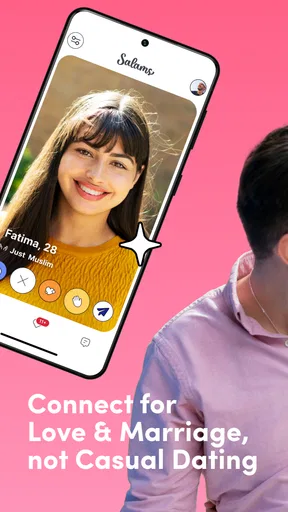
I think Salams is worth trying for an adult Muslim who wants a focused way to meet people for marriage, friendship, or halal dating and who is comfortable taking responsibility for their own boundaries. It is particularly suitable for someone who wants to state intentions early instead of navigating the ambiguity common on mainstream dating platforms.
I would be more cautious recommending it to someone who dislikes profile-based introductions, feels pressured by relationship apps, or is currently vulnerable to financial or emotional manipulation. No app is a good solution for loneliness if it encourages rushed trust. Someone seeking purely anonymous conversation, unrestricted casual dating, or a general social network would probably be happier elsewhere.
It is also not the right choice for anyone under the mature age requirement. Adults should still consider whether they are emotionally ready to discuss marriage and whether they have a support system for handling difficult interactions. The app can open doors, but it cannot make decisions about readiness, safety, or compatibility on the user’s behalf.
My final view after weighing usefulness against caution
I like the fact that Salams gives Muslim marriage and friendship a dedicated space rather than treating those needs as an afterthought. Its focused audience can make conversations more relevant, and the free entry point lowers the barrier to seeing whether the community suits me. The app’s established presence, with more than a million installs, also indicates that it is not an obscure experiment.
Still, I would not describe it as a shortcut to a trustworthy relationship. The mature rating, the possibility of paid purchases, and the personal nature of the conversations all make self-management important. I would review settings, limit what I disclose, keep control of the pace, and use independent judgment before meeting or committing emotionally.
My cautious verdict is that Salams is a worthwhile option when its purpose matches yours and you use it deliberately. I would recommend starting slowly, deciding in advance what information stays private, and treating every new connection as unverified until behavior proves otherwise. Used that way, it can be a practical bridge between online discovery and a more serious, respectful relationship—not a replacement for patience, community, or common sense.
Pros
- Focused on Muslim marriage
- with faith-based preferences and intentions.
- Detailed profiles help users compare values
- lifestyle
- and religious expectations.
- Privacy tools let members control photos and personal information.
- In-app chat supports getting to know matches before sharing contact details.
- Available on both Android and iOS for convenient access.
Cons
- The strongest features may require a paid subscription.
- Match quality depends heavily on the number of active users in your area.
- Some profiles may be incomplete or slow to respond.
- Religious and cultural preferences can make the matching pool feel limited.
- Users should remain alert for fake profiles and avoid sharing sensitive details.
FAQs for Salams: Halal Muslim Marriage
What is Salams: Halal Muslim Marriage, and who is it designed for?
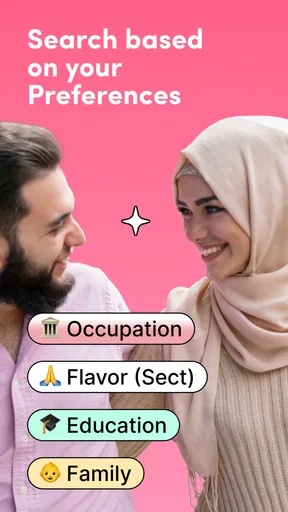
Salams is a Muslim-focused matchmaking app designed for people seeking marriage or a serious, faith-conscious relationship. Its profile system lets users share information about religious practice, values, lifestyle, education, and marriage intentions. The app is generally aimed at Muslims who want an alternative to casual dating platforms, although users should still communicate clearly about their expectations and confirm that a potential match is genuinely looking for marriage.
How does matching and messaging work on Salams?
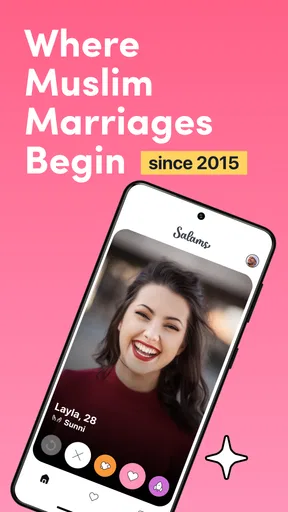
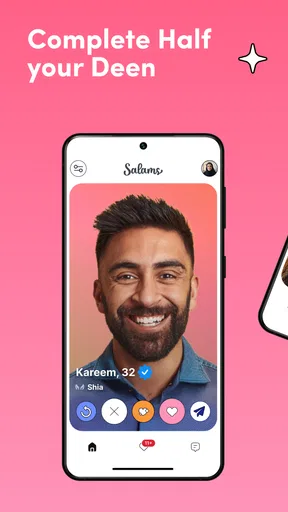
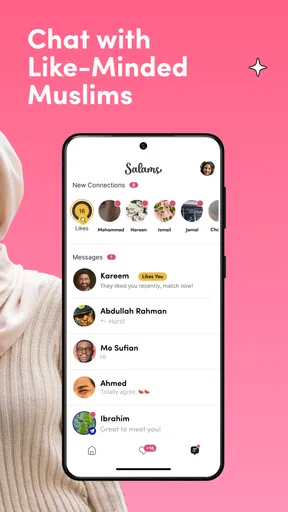
After creating a profile, you can browse suggested members and indicate whether you are interested in connecting. When interest is mutual, the app allows the two people to start a conversation and learn more about one another. The exact experience can vary by location, account type, and app updates, and some features may require payment. Users should take time to read profiles carefully rather than relying only on photos or quick matching decisions.
Does Salams offer privacy, safety, or chaperone-related features?
Salams includes features and settings intended to support a more respectful and privacy-conscious matchmaking experience, such as profile controls, reporting tools, and options that may help involve a trusted person in the conversation. However, no dating or matchmaking app can guarantee that every profile is authentic or every interaction is safe. Avoid sharing financial details, identity documents, private images, or your home address, and report suspicious behavior promptly.
Is Salams free to download and use?
Salams can generally be downloaded without an upfront charge, and users may be able to create a profile and use selected matchmaking functions for free. Additional tools, visibility options, or communication-related benefits may be offered through subscriptions or in-app purchases. Pricing and available features can differ according to country, platform, and current promotions, so review the purchase screen and subscription terms carefully before confirming any payment.
What should I know before meeting someone I matched with on Salams?
A match on Salams is only an introduction, not a guarantee of compatibility, identity, or serious intentions. Spend enough time communicating in the app, ask direct questions about faith, family expectations, location, and marriage plans, and consider involving a trusted family member or chaperone when appropriate. If you decide to meet, choose a busy public place, tell someone where you are going, arrange your own transportation, and leave immediately if you feel uncomfortable.


